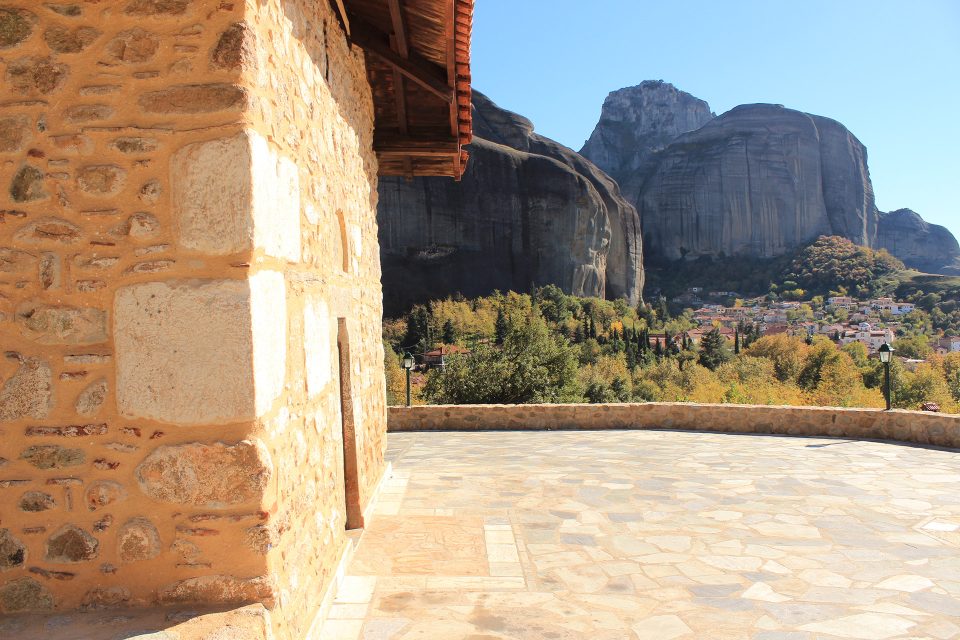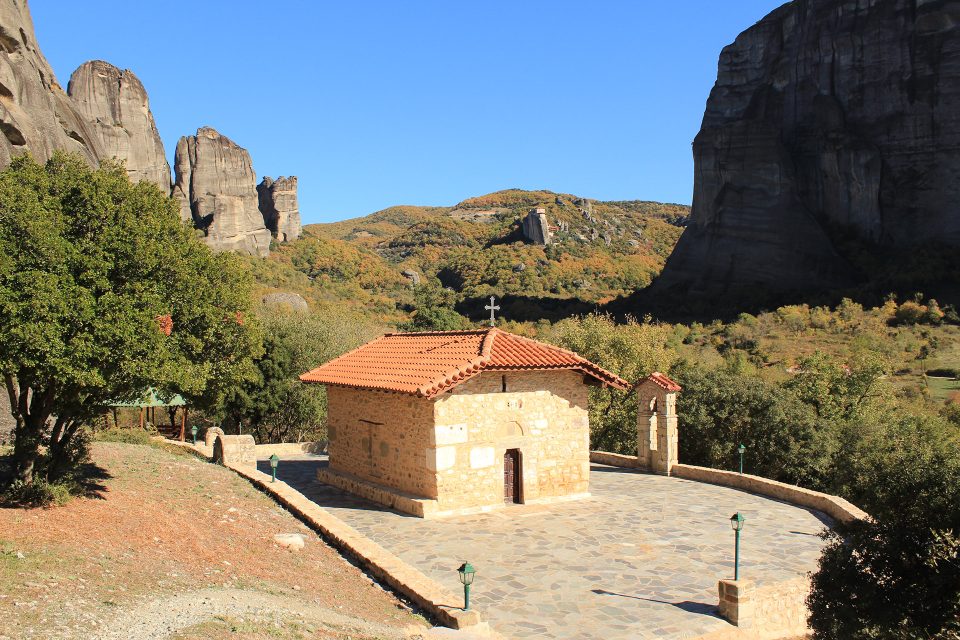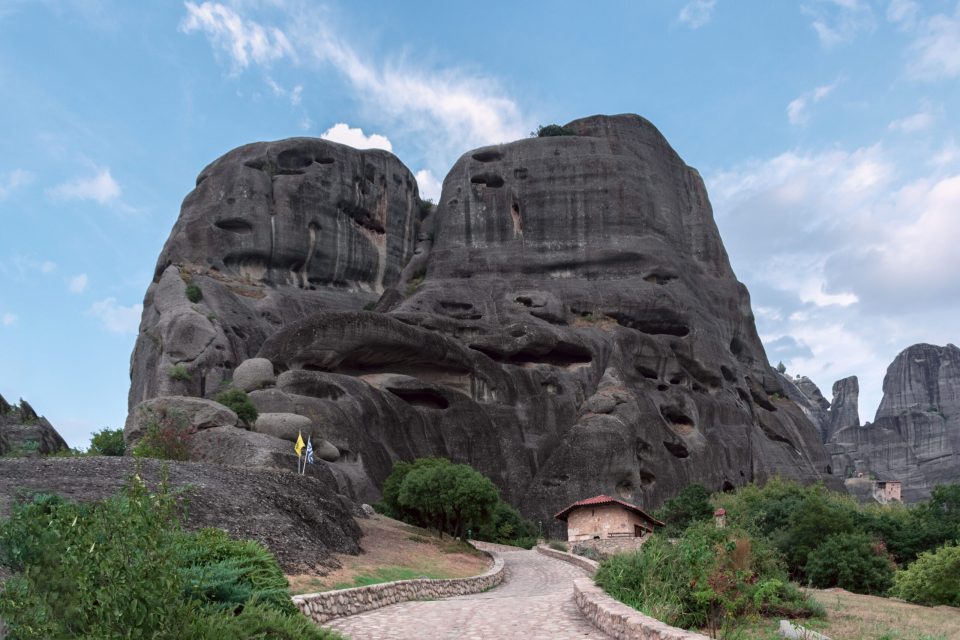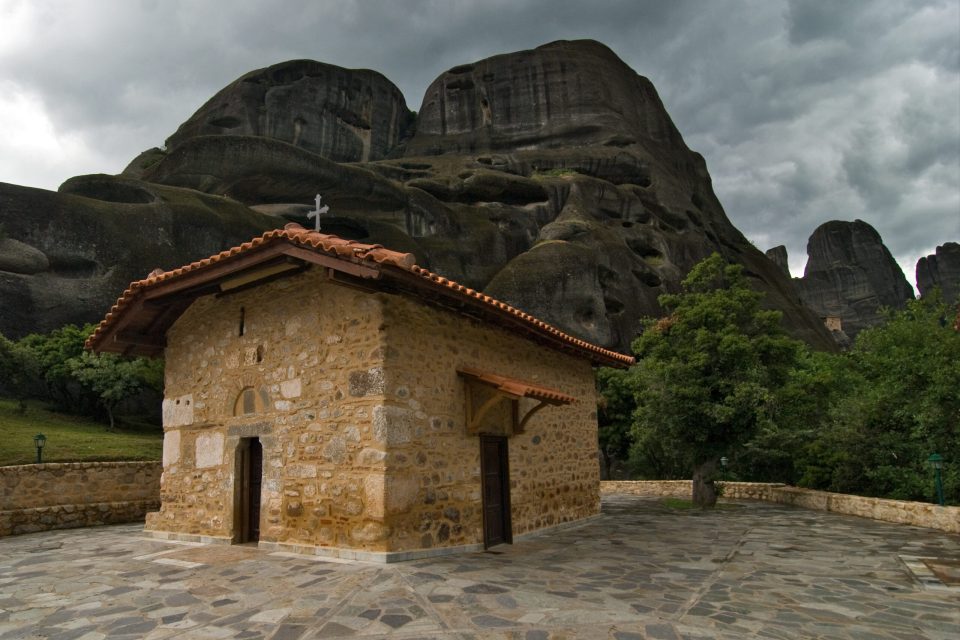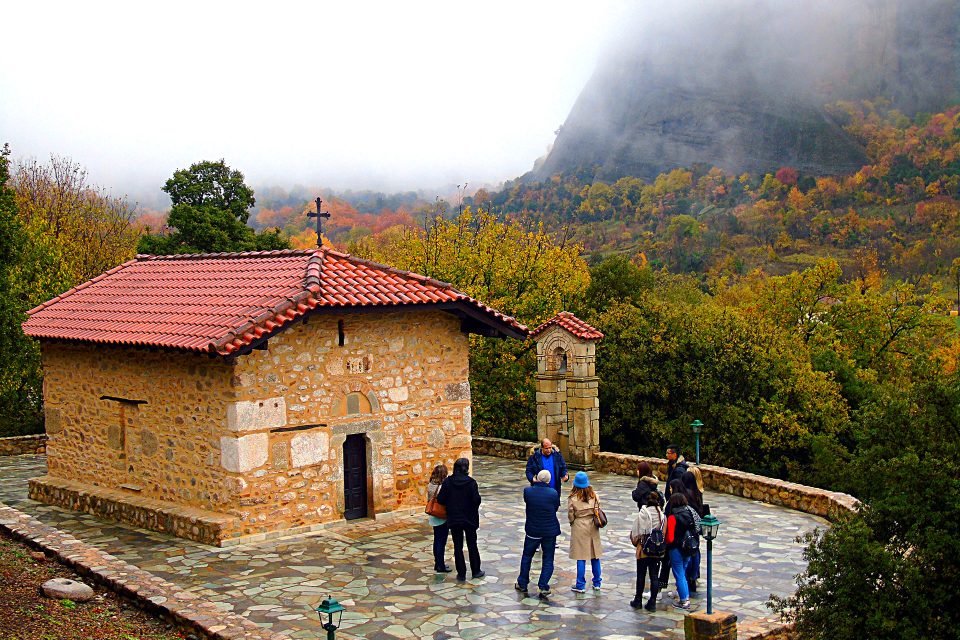
Before the grand monasteries were built atop the cliffs of Meteora, it all began here — at Doupiani, the sacred rock where the region’s first monastic community gathered in the 11th century. The humble Chapel of the Virgin Mary of Doupiani is more than a ruin; it is the foundation stone of Meteora’s spiritual legacy.
The first skete (hermitages) in the region of Meteora appeared on the low rock of Doupiani around the 9th century A.D. Later on, reasons of safety and security urged the first monks to abandon them and settle on higher rocks. In the late 12th century a small church called Panaghia Doupiani (Virgin Mary of Doupiani) was built on the foothills of this low rock.
It became the focal point in which all hermits would gather to attend the Sunday liturgy some 2 centuries before the idea of building the first monastery of Meteora. Some indicative dates as to when exactly the hermit monks arrive into the area are either the 9th or the 10th century. At the end of the 11th century and early 12th, a small ascetic community was already established around Meteora.
During that period the hermits of Meteora saw the need to gather around a place of their own in order to attend the Sunday’s liturgy. So they decided to erect a small church dedicated to Theotokos that quickly became the center of their worship.
This church is also referred to it as the “Kyriako” translated into Sunday’s, or “Protato” meaning the first. This church of Theotokos (Virgin Mary), known also among the locals as the chapel of Doupiani, still preserves significant frescos from the 13th century.
Owing to the magnificent view of this location, a new district with traditional houses, small but modern hotels, and well-known tavernas emerged around Doupiani, in the picturesque village of Kastraki.
Tip: Visit in the early morning or near sunset for soft lighting and peaceful solitude.
Best time to avoid crowds
Doupiani is usually much quieter than the main monasteries, so the best time is more about atmosphere than crowds. Visit in the early morning or late afternoon, when the light is softer and the surrounding rocks feel especially peaceful. It is also a good stop when the main monastery roads are busy.
Best nearby monastery to combine with Doupiani
Combine Doupiani with Agios Nikolaos Anapafsas Monastery. The area sits close to Kastraki and works well as a gentle cultural stop before or after visiting Agios Nikolaos, especially if you want to include one of Meteora’s older and more atmospheric religious landmarks.
Photography tip
Step back and frame the chapel with the surrounding Meteora rocks rather than focusing only on the building itself. Doupiani is especially photogenic because of its quiet setting, so wide shots that include the landscape usually work better than close-up photos.
Parking / access tip
Access is generally easier than the larger monasteries, with no major staircase involved. Parking is limited and informal nearby, so it is best to visit with a small vehicle or on foot from Kastraki if your route allows. Wear comfortable shoes, as the ground around the chapel can be uneven.
A: It is one of the oldest surviving religious structures in the Meteora region, believed to be the first gathering place for the area’s hermit monks in the 11th–12th century.
A: Entry may be restricted due to preservation concerns, but you can approach the site, observe its architecture, and view the surroundings on foot.
A: Yes — it is often included in sunrise or sunset hikes, especially those exploring the hermit caves or lower trails around Kastraki.